


Without the right card setup, your finance team can quickly lose visibility over where money is going and how efficiently it is being managed.
As Jihane Karym, a fellow Product Manager at Mobilexpense explains:
Now that we know business credit cards have become a critical source of spend data, choosing the right solution matters more than ever.
In this article, we will explore what finance teams should look for when evaluating business credit cards, the key differences between providers, and how to create the right setup.
Why choosing the right business credit card matters for finance teams
The right setup helps your finance team:
- Improve cash flow visibility
- Track company spending in real time
- Reduce manual admin and reconciliation work
- Empower employees to make approved purchases faster
- Strengthen compliance and spending controls
At the same time, not every business card solution fits every company. The right choice depends on several factors, including your business structure, spending behaviour, and existing finance processes.
It is important to consider:
- Business size: How many employees need access to company cards, and how easily can those cards be managed at scale?
- Spending volume: How much company spend flows through cards each month, and what level of control or reporting is required?
- Integration with existing tools: How well does the card integrate with your accounting software, HR systems, expense management platform, ERP, or e-commerce tools? Can employees pay directly through the platforms your business already uses? Are there international payment limitations to consider, such as vendors that do not accept certain card providers?
The more connected your business credit card is to your wider finance ecosystem, the easier it becomes to automate processes, improve visibility, and give your finance team more control over company spend.
What is a business credit card?
Some benefits of business credit cards for finance teams include:
- Saving time by reducing manual expense tracking, reconciliation, and approvals.
- Bringing company spending into one place for better visibility and control.
- Strengthening spending policies with smarter limits and approval workflows.
- Tracking spend in real time to support faster, more informed decisions.
- Reducing fraud risk with secure virtual cards and controlled permissions.
- Making reimbursements easier by separating personal and business expenses.
- Improving cash flow visibility with pre-approved and trackable spending.
- Giving employees faster access to approved company funds.
- Simplifying vendor and subscription management across teams.
- Reducing operational complexity through connected finance workflows.
How is a business credit card different from a personal credit card?
From my experience working with teams, one of the biggest challenges with traditional bank cards is the lack of real-time visibility over company spend. Finance teams often don’t know whether they’ve spent 10% of their monthly budget or already exceeded it until the end of the month.
To understand the risks of using bank cards for business, read this article: Risks with Using Bank Credit Cards for Business Expenses.
How to choose the right business credit card for your company
Some tips from an article by Fund&grow can be summarised below:
- Compare cards side by side: Look beyond the headline rewards. Compare fees, spending controls, integrations, eligibility requirements, and the level of visibility each card gives your finance team.
- Calculate the real value: Many providers offer calculators to help estimate the true value based on your business activity.
- Prioritise your business needs: Every business operates differently.The right card should support the way your business actually spends and grows.
What I’ve consistently seen is that businesses regret not paying attention to card costs, transaction fees, and any hidden costs before choosing a provider. One common mistake is selecting a provider before checking whether their cards actually work in the countries where the business operates.
Questions to ask before choosing a business credit card
1. How big is your company and how many cardholders do you need?
As your spend and business requirements change, managing spending through traditional bank cards quickly becomes more difficult. Businesses issuing cards at scale usually need:
- Stronger controls
- Centralised management
- Real-time visibility over company spend
2. What does your spending profile look like?
The way your business spends should shape the type of card solution you choose.
For example, companies with high travel spend, international payments, subscriptions, or recurring operational costs often need more flexibility, real-time tracking, and automated reconciliation to avoid time-consuming manual processes.
3. Do you need the card to integrate with expense management or accounting tools?
One of the biggest frustrations finance teams experience is managing spending across disconnected platforms. When card transactions do not flow directly into the expense management platform, reconciliation becomes manual, delayed, and difficult to control.
4. How much control do you need over employee spending?
We have some finance teams that are quite afraid of giving credit cards to their employees because they feel that they might lose some kind of control over the spend of their company.
Modern card solutions now allow finance teams to freeze cards instantly, set spending limits, block merchants, and restrict transactions by category or timeframe.
5. What integrations do you need?
Businesses should carefully assess how well a card solution connects with their wider finance ecosystem.
From the insights I’ve gathered, everything becomes easier when your cards and expense management platform are fully integrated.
A checklist: What to ask before choosing a business credit card
The best European business credit cards for 2026
1. Mobilexpense cards
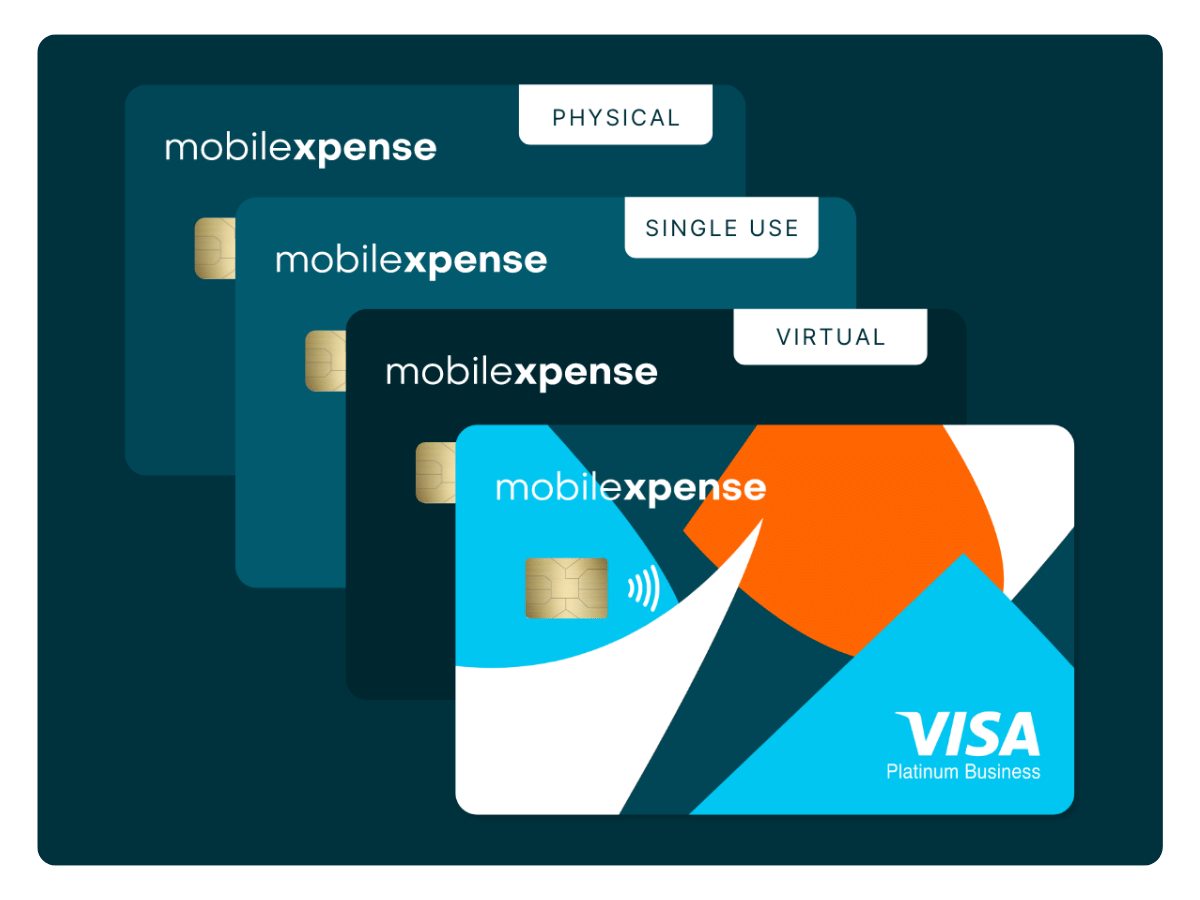
Mobilexpense cards are a powerful spend management tool designed for finance leaders who want greater control, visibility, and automation across company spending. Available as virtual and physical Visa cards, the cards are fully integrated into Declaree by Mobilexpense to create one connected workflow for card spend, expenses, approvals, and compliance.
Unlike traditional card setups that rely heavily on delayed bank statements and disconnected systems, Mobilexpense combines card management and expense workflows into one platform. Finance teams can manage employee spending, automate policy enforcement, and track transactions in real time while maintaining a consistent approval and reporting flow across the business.
Instead of juggling disconnected systems, delayed statements, and manual approvals, your finance team can manage the entire card lifecycle from one central platform. Every transaction appears in real time inside Mobilexpense, giving finance leaders instant visibility into company spend while helping employees move faster with fewer administrative delays.
When you start purchasing and spending with your Mobilexpense card, everything appears instantly inside Mobilexpense. You see the transaction live and only need to add the receipt.
Mobilexpense cards are available from €4 per user per month. The pricing is designed for businesses that want to combine company cards, expense management, policy enforcement, and compliance workflows within one connected platform.
2. Qonto cards
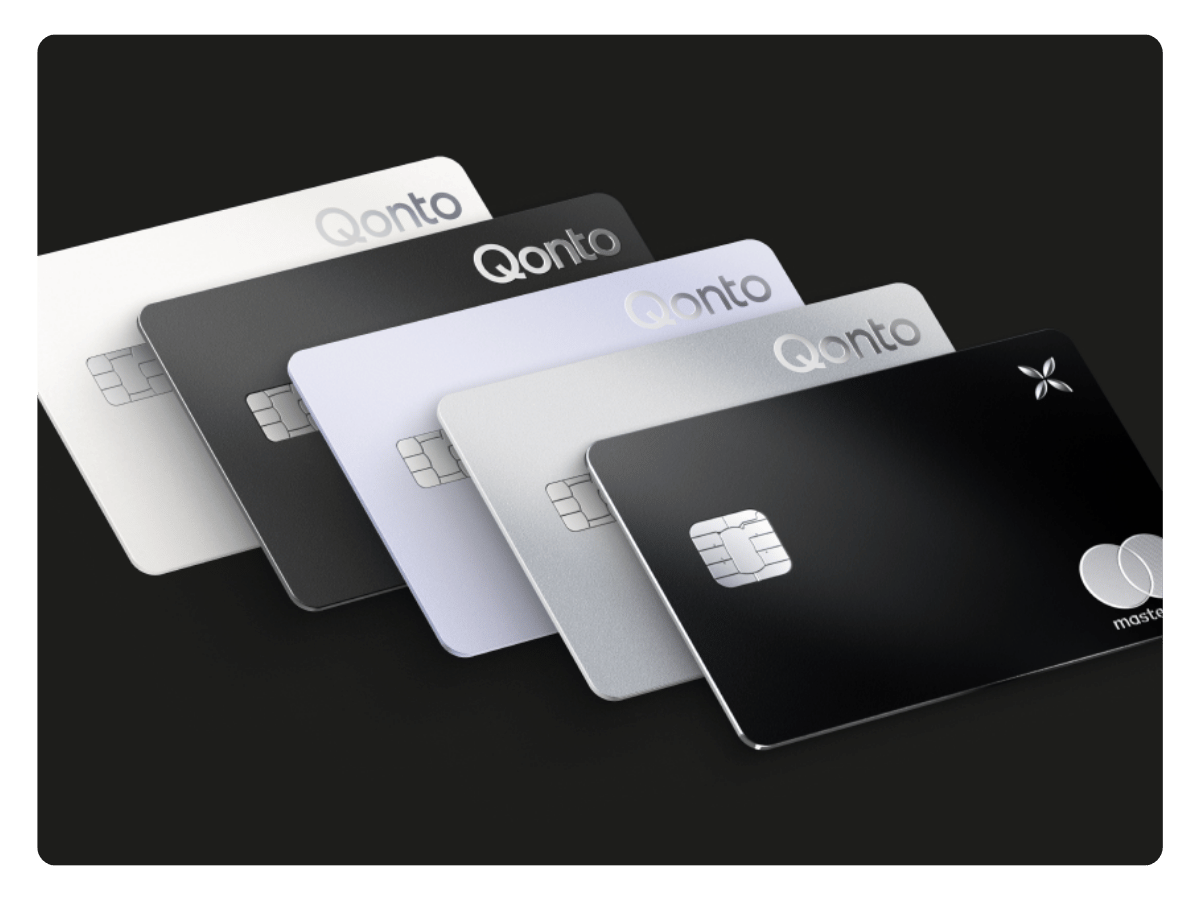
Qonto cards are business credit or debit cards made for companies that want to manage everyday spending, international payments, and team expenses from one banking platform. The cards are built for small and growing businesses that need flexible spending controls, multiple accounts, and simplified financial management across teams.
By combining business banking and spend management features within one platform, Qonto gives finance teams more visibility over company spending while supporting both digital payments and day-to-day operational expenses.
Qonto card pricing ranges from free to €30 excluding VAT per month depending on the subscription plan and card type selected. Depending on the subscription plan, businesses can receive up to 30 cards included, with additional debit cards costing €5 per month each.
3. Payhawk cards
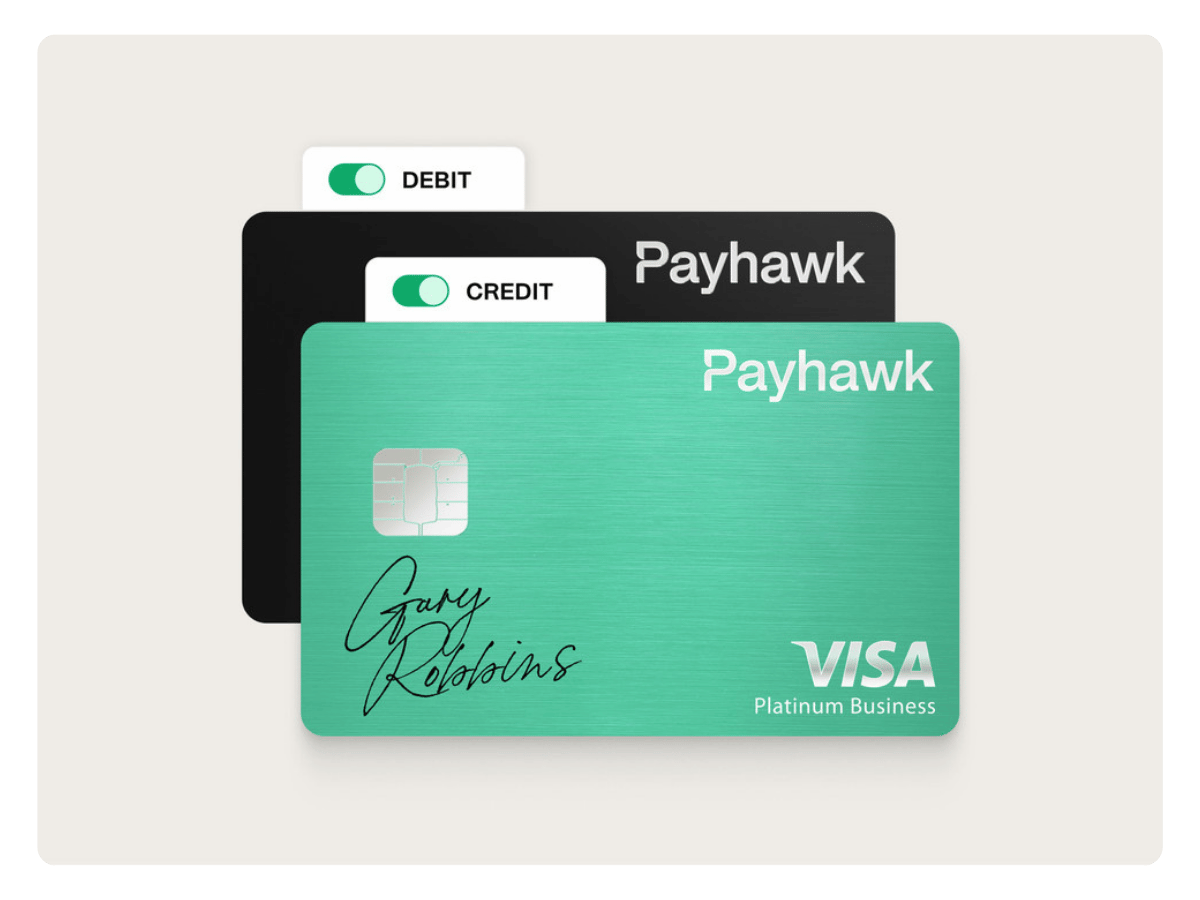
Payhawk cards are corporate expense cards made to help businesses manage company spending across teams and locations.
Available as debit or credit cards in virtual, plastic, or metal formats, the cards are built for businesses that want more flexibility when managing employee expenses and international payments.
The platform combines card management and spend tracking within one system, giving finance teams more visibility over company spending while supporting both in-office and remote teams.
Payhawk’s card pricing is not transparently disclosed on their website but it does mention that pricing is flexible and tailored to fit your business needs. You can start with one plan, combine two, or get the whole platform.
4. Moss cards
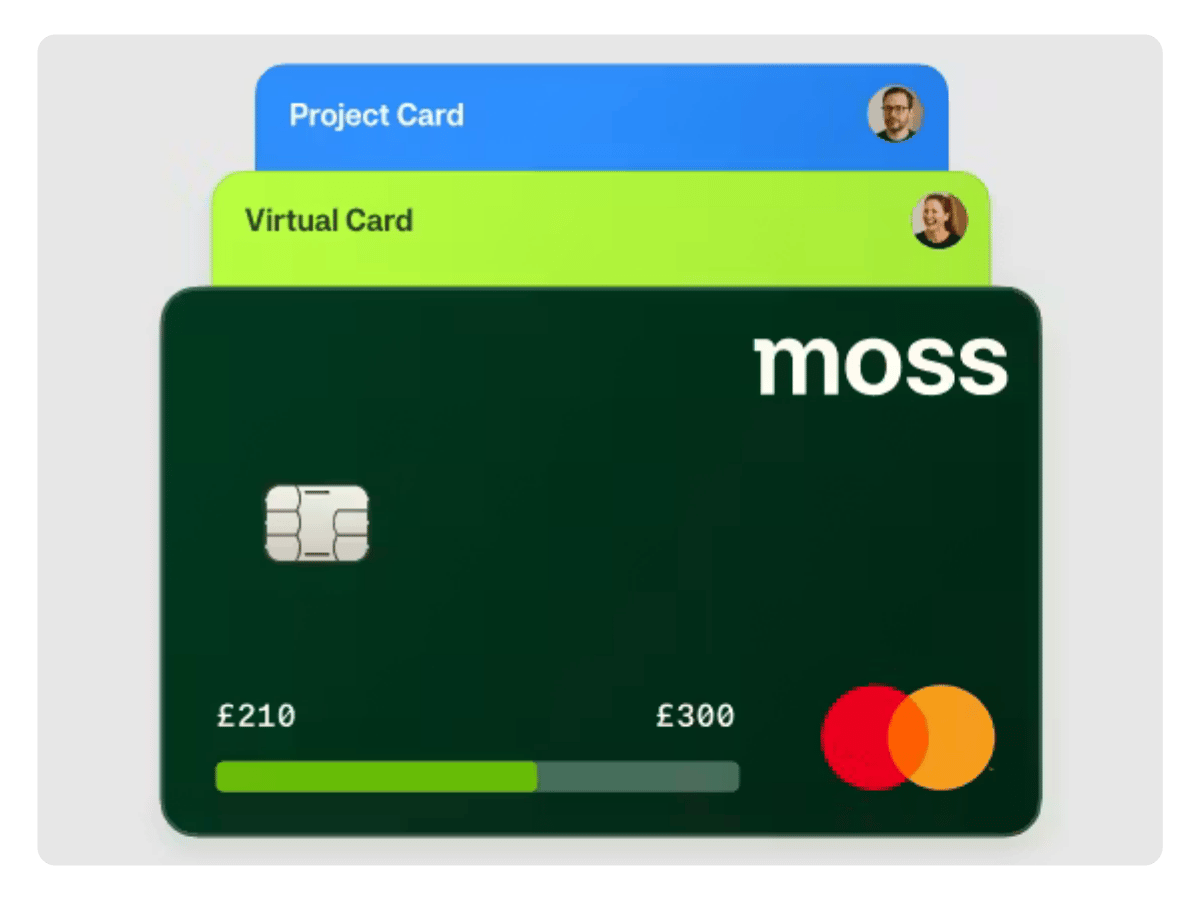
Moss cards are corporate cards that could help businesses manage company spending with more flexibility and day-to-day control. Available as both credit and debit cards, Moss supports businesses that want to manage employee spending, automate receipt collection, and improve visibility across operational expenses.
The platform combines virtual and physical cards with spend controls, accounting integrations, and automated receipt collection tools to support growing finance teams and distributed businesses.
Moss offers both free and paid plans depending on company size and automation requirements. Free plans support smaller teams with unlimited cards, while paid plans are designed for growing businesses that need more users, controls, and finance automation.
5. Soldo cards

Soldo cards are business payment cards that help companies manage employee spending, fuel costs, and operational expenses from one platform.
Soldo offers debit cards, prepaid cards, virtual cards, and fuel cards for businesses that need more flexibility and visibility across company spending.
The platform combines spend controls, receipt capture, and reporting tools to support businesses managing both office and field-based expenses across multiple teams and locations.
Soldo pricing starts from €21 per month + VAT for the Standard plan and €33 per month + VAT for the Plus plan, with higher-tier plans offering additional automation, reporting, wallets, and spend management capabilities. Specific card pricing is included in the general pricing calculation.
6. Revolut business cards
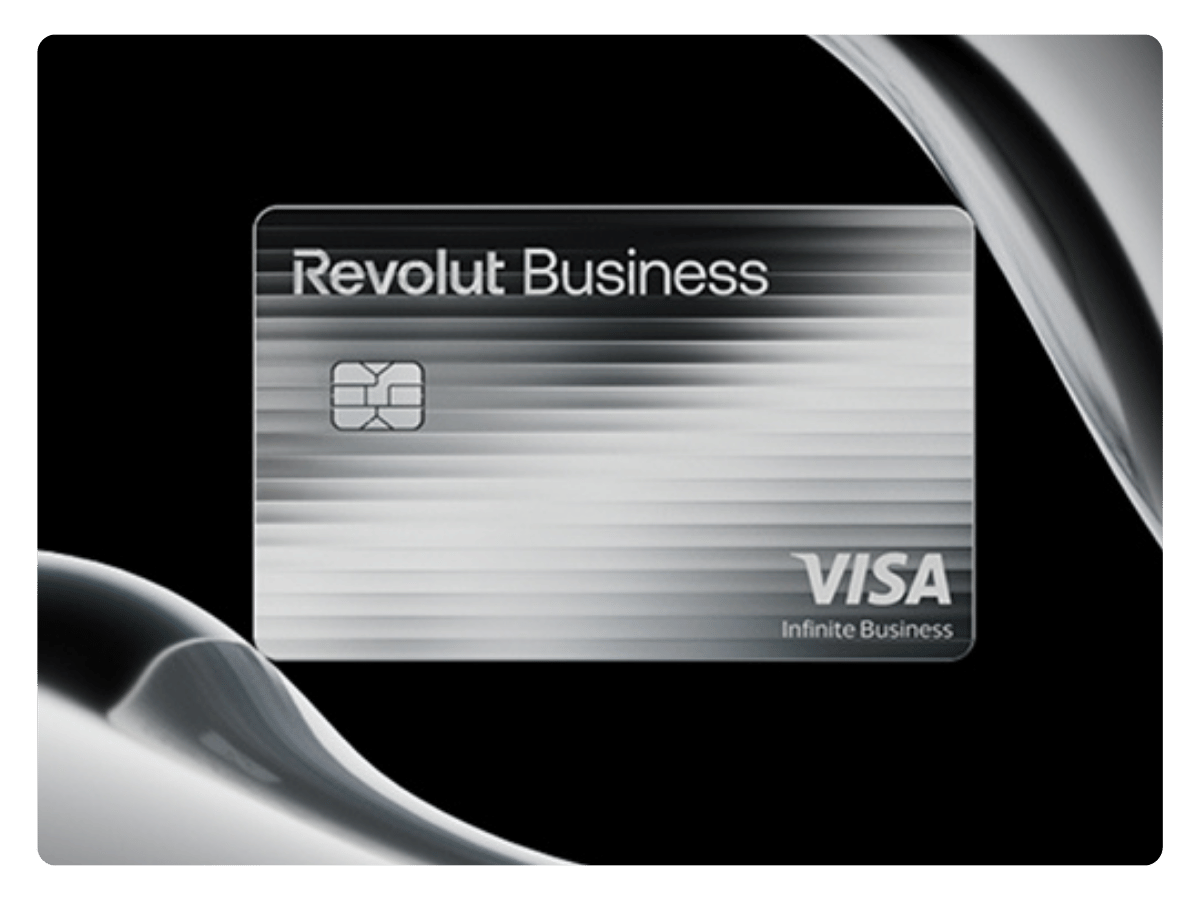
Revolut business cards business payment cards for companies that want to manage spending, international payments, and business finances through one digital platform.
The solution is aimed at incorporated businesses operating in supported countries and industries that need flexible spend controls and multi-currency financial management.
Revolut Business pricing starts from €10 per month for the Basic plan and €30 per month for the Grow plan, with higher tiers offering additional spend management, financial tools, and operational features.
Closing thoughts
If I were advising a finance manager in a growing European business, I would tell them to choose the card that removes the most operational friction from their day, not the one with the most lifestyle perks or banking features.
Most finance teams are not struggling because employees cannot make payments. They are struggling because they are constantly chasing receipts, correcting manual exports, dealing with delayed visibility into spending, and trying to justify every hour lost to repetitive admin work.
That is why Mobilexpense stands out.
Mobilexpense doesn’t just give employees a card. It connects every transaction directly into the expense and approval workflow in real time, so finance teams can see spend immediately, enforce policies automatically, and reduce the back-and-forth that slows down month-end close.
For SMB and mid-market companies especially, the ROI becomes much easier to justify when the time-savings are visible across the entire process, from payment to reconciliation.
If your finance team is concerned about losing control over employee spending, Mobilexpense combines flexibility with powerful safeguards. Cards can be frozen instantly, merchant categories can be restricted, and spending limits can be adjusted in seconds, all without losing visibility over day-to-day operations.
From my experience, the goal for finance teams is simple: gain time, gain visibility, and reduce manual work. What we are trying to bring is more control, but also a more delightful product experience for users.
Disclaimer: The above research was conducted by Mobilexpense during Q2 2026. Please note that Mobilexpense has not independently tested or verified the product referenced in this document. All information regarding features, functionalities, and capabilities has been based solely on publicly available information published on the vendor’s website as of May 2026. As such, the accuracy, completeness, and current validity of this information cannot be guaranteed, and product capabilities may have changed since the time of research.
Share this

How to Manage Business Expenses Effectively in 2026
Mobilexpense vs Rydoo: A 2026 Spend Management Tool Comparison
/Listing%20Images/Achieve%20VAT%20Compliance%20With%20The%20Right%20Expense%20Solution.png)
Mobilexpense vs Circula: Which 2026 Spend Management Platform Is Right for You?