


What is spend analysis and why does it matter today?
Analysing company spend isn’t a topic that usually gets the spotlight. It’s not flashy. It doesn’t promise explosive growth. But it’s at the centre of how money actually moves through a business.
According to SAP:
“Spend analysis is the process of reviewing procurement spend metrics and assessing performance data to reduce costs, improve strategic sourcing, and strengthen supplier relationships.”
- SAP
Why is spend analysis becoming critical in today’s economic climate?
1. Economic pressure is forcing companies to do more with less
Every euro counts, now more so than ever. Global GDP growth is anticipated to slow from 3.3% in 2024 to 3.2% in 2025 and 3.1% in 2026, according to the IMF report.
“In early 2025, GDP growth was fueled as businesses stockpiled inventory ahead of new tariffs, but that temporary boost is expected to fade in 2026. Higher tariffs will continue to impact global growth, trade, investment, and broader economic activity.”
- IMF Report, 2026
This means every cent needs to be accounted for.
Global spending is rising, and if you don’t understand where that spend going (especially as prices increase), you are leaving your business exposed to costs you can’t control.
2. Expectations changing for CFOs and procurement leaders
CFOs are now expected to be strategic partners, not just bookkeepers. They need spend visibility and data to back decisions.
At the same time, procurement and supply chain leaders are sitting on some of the most valuable data in the business yet still struggle to influence the conversation.
“Procurement teams are under pressure to always deliver what’s new and what’s best, staying ahead of innovation while maintaining compliance and cost efficiency.”
According to GEP software, procurement and supply chain leaders, despite being armed with data that, when used can directly influence cost, risk, and capital efficiency, often find themselves waiting at the end of the queue. The imbalance is not about technology anymore: it's about voice.
In 2026, chief procurement and supply chain officers will have to advocate more forcefully for their digital priorities and learn to express their ambitions in the language that boards understand best — the language of shareholder value.
3. Boards and investors are demanding tighter cost discipline and faster reporting
At the same time, companies generate large amounts of spending data but often lack visibility into where money is actually going.
This is where things start to break down. The data exists. The insight doesn’t.
In a white paper published by UiPath, Chris Engel, Global Discovery Lead at Johnson Controls Inc reports that:
“We have a lot of complex processes like accounts payable, where we’ve only been able to automate parts of it. Those automations do well, but they don’t span the process from one end to the other”
- Chris Engel, Global Discovery Lead at Johnson Controls
How does a lack of spend visibility impact financial decision-making?
CFOs are no longer expected to just report what happened. They’re expected to shape what happens next. When visibility is missing, decisions don’t stop, they just get made on weaker foundations.
- Teams fall back on gut feeling or outdated reports instead of real data.
- Budget overruns aren’t caught early; they’re discovered when it’s already too late to course correct.
- Meanwhile, duplicate suppliers or receipts, missed volume discounts, and poor contract compliance quietly slip through the cracks.
- Risk doesn’t announce itself either; it builds in the background, through fraud, maverick spend, and compliance gaps that go unnoticed until they become real problems.
And despite the volume of data available, many companies are still relying on spreadsheets, which only widen the visibility gap. Free does not equal visible.
The disadvantages and limitations of spreadsheet-based spend tracking
According to Athena Commercial, “Spreadsheet-based spend management tracking has three fundamental limitations:
- Data consolidation requires manual extraction from multiple systems, which is time-consuming and error-prone.
- Classification accuracy depends on individuals applying categories consistently, which they never do.
- Scalability fails as data volumes grow, making spreadsheets unmanageable and fragile.
Spend analytics software automates each of these steps, connecting directly to ERP and finance systems, applying consistent classification rules and presenting results through interactive dashboards.”
Why is spend analysis in spend management important?
Due to maverick spending for example. According to SAP, this happens when your employees make purchases that ignore or surpass the expense policies set by your organisation.
With the ease of online buying, even B2B goods and services can be acquired by anyone with an internet connection.
When your employees are rogue spending, your business experiences higher costs, lost visibility, unreliable quality, and potential compliance issues if the buyer doesn’t stick to legal or regulatory requirements.
For procurement managers, it can also damage your relationships with preferred suppliers, who may not appreciate being sidestepped.
Why are employee expenses overlooked in spend analysis?
Employee expenses such as travel, meals, and per diems are often analysed separately despite representing a significant share of total spend, but including them in spend analysis gives finance teams a complete view of company spending and unlocks additional opportunities for cost optimisation.
What are the benefits of spend analysis?
Although these spend analysis tools come with a cost, the value gained from clearer visibility, better insights, and more effective spend analysis far outweighs the investment.
In 2026, leadership will be measured not by the quantity of automation, but by the quality of oversight.
- Spend analysis brings spending back under control.
- It gives organisations the visibility they need to support better financial decision-making and cost management, turning scattered data into something teams can actually act on.
- It helps businesses identify inefficiencies, reduce unnecessary spend, and optimise supplier relationships before issues turn into real financial impact.

What are the key questions spend analysis helps answer?
The spend analysis process
Spend analysis is not a one-off task. It is a structured, repeatable process that turns scattered financial data into clear, actionable insight. When done well, it moves teams from reactive reporting to proactive cost control and smarter decision-making.
At its core, the process follows a logical flow:
- Data consolidation: Bring all spend management data into one place, including company cards, invoices, expense claims, and purchase orders. Without this, visibility is always incomplete.
- Categorisation: Standardise how spend categories are tagged so teams can compare like-for-like across suppliers, departments, and time periods.
- Reporting and dashboards: Translate raw data into clear visuals and insights that highlight trends, risks, and opportunities.
- Continuous monitoring: Treat spend analysis as an ongoing discipline, not a year-end exercise, so issues are spotted and addressed early.
To make this work in practice, companies typically follow four key steps:
A practical example of the spend analysis process
- Collect the data
The finance manager gathers spend data from across the business (accounting systems, invoices, expense reports, and company cards), bringing everything into one place. - Clean the data
They remove duplicates, standardise supplier names, and fill in missing information to ensure the data is accurate and reliable. - Classify the data
Next, the finance manager organises transactions by supplier, department, and spend category, making the data structured and easy to compare. - Analyse the data
With everything in place, they identify patterns, inefficiencies, and opportunities, turning raw data into clear actions that improve cost control and support better business decisions.
What are examples of insights companies can gain from spend analysis?
Once spending data is analysed, organisations can uncover valuable, actionable insights that go beyond basic reporting and support better decision-making, such as:
- Identifying duplicate software subscriptions
- Detecting unusual or suspicious expense patterns
- Consolidating suppliers across departments
- Finding opportunities to renegotiate contracts
- Discovering departments that consistently exceed budgets
What are common challenges in spend analysis?
- Fragmented data across multiple sources
Fragmentation makes it difficult to get a complete and accurate view of total spend. - Time-consuming data collection
Finance teams often need to manually gather data from multiple systems, export files, and combine spreadsheets. This process is slow, resource-intensive, and delays analysis. - Inconsistent data formats
Each source captures and structures data differently. This leads to inconsistencies in how transactions, suppliers, and categories are recorded, making direct comparison difficult. - Manual categorisation and allocation
Assigning spend to the correct departments, cost centres, and categories often requires manual input. This increases the risk of mistakes and makes the process harder to scale. - Lack of standardisation
Supplier names, categories, and transaction details may vary, limiting the reliability of insights. - Limited visibility and delayed insights
Because of the time required to collect and prepare data, insights are often delayed. By the time analysis is complete, the information may already be outdated. - Difficulty turning data into action
Without clear trends or structured reporting, it is hard to identify opportunities for cost optimisation. - Shift from data capture to value extraction
Cleaning, standardising, and structuring data is essential to unlock real value. - Balancing data capture with cost optimisation
There is a paradox in spend analysis. Companies aim to capture as much data as possible, but the ultimate goal is to reduce and optimise spend. Without proper analysis, this goal remains out of reach.
How do companies effectively collect spend data from multiple sources?
The challenge is not collecting data, it is collecting it consistently and completely.
To do this effectively, companies need to move away from fragmented processes and towards a single source of truth.
This typically means using a central platform that can:
- Integrate with multiple data sources (cards, invoices, expenses, ERP systems).
- Automatically capture and import transactions.
- Standardise how data is recorded from the moment it enters the system.
The goal is simple: no more chasing data across tools or reconciling multiple spreadsheets. Instead, all spend is captured in one place, in a consistent format.
Without this foundation, everything that follows becomes slower, more manual, and more error-prone.
What are the biggest challenges in cleaning and standardising data?
Once data is collected, the next challenge begins: making sense of it.
As mentioned, spend data comes from different sources, each source has its own way of structuring and presenting information.
For example:
- Card transactions may use different formats or merchant names.
- Employee-entered expenses can vary in quality and completeness.
- Invoices often follow supplier-specific layouts.
This creates a fragmented dataset where the same type of information looks completely different depending on where it came from.
The outcome is that data that is difficult to compare, analyse, or trust.
The core challenges
- Inconsistent formats: Different sources structure data differently.
- Duplicate entries: The same transaction may appear multiple times.
- Missing or incomplete data: Key fields like category, VAT, or cost centre may be absent.
- Unstructured inputs: Receipts and invoices often require extraction before they can be used.
Why standardisation is difficult
Standardising data means transforming all these inputs into a single, consistent format. This includes aligning fields such as:
- Transaction amount and currency
- VAT details
- Merchant or supplier name
- Category
- Transaction date
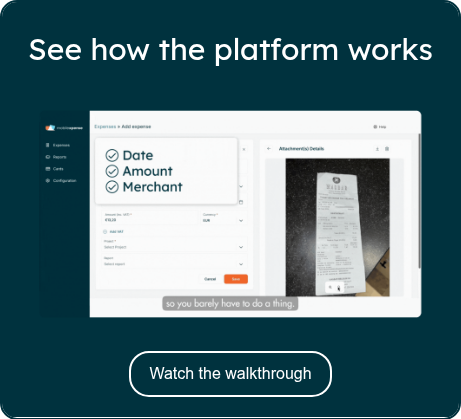
One of the most effective ways companies address this is through automation, particularly using technologies like OCR (optical character recognition). These tools extract data from receipts, invoices, and other documents, then convert it into structured, usable information.
The goal is not just to clean the data, but to make it:
- Readable for analysis tools
- Consistent across all sources
- Compatible with downstream systems like ERP platforms
How should organisations categorise their spending to get meaningful insight?
Once data is clean and standardised, categorisation becomes the key to unlocking insight.
Without consistent categorisation, even the best data remains difficult to interpret.
1. Build a clear structure
Organisations should categorise spend in a way that reflects how the business operates. Common dimensions include:
- Supplier: Who the company is buying from
- Department or team: Who is spending
- Category: What the spend is for (e.g. travel, software, office supplies)
- Location: Where the spend occurs
This structure allows finance teams to answer critical questions, such as:
- Which suppliers account for the highest spend?
- Which teams are overspending or under budget?
- Where are there opportunities to consolidate vendors or negotiate contracts?
2. Balance detail with usability
There are two common approaches to analysing spend data:
1. Traditional analysis tools
Many organisations export data into tools like Excel, Power BI, or Tableau. This allows for deep, customised analysis, but it is often manual and time-consuming to maintain.
2. Automated and AI-driven analysis
Increasingly, companies are using tools that analyse spend data, automatically. These systems can:
- Identify trends and anomalies
- Highlight top suppliers or categories
- Surface optimisation opportunities
The advantage is speed and accessibility. Instead of building dashboards manually, finance teams receive insights directly.
That said, the level of analysis depends on the need. Some teams require deep, detailed reporting. Others simply need a clear view of overall trends.
Closing thoughts on intelligent spend analysis
The future of spend analysis has shifted towards connected systems.
Rather than manually exporting and analysing data, tools talk to each other with the data. Spend management systems like Mobilexpense, analytics platforms, and ERP tools can now share data automatically, reducing manual effort and speeding up insight generation.
At the same time, AI is playing a growing role in analysing spend data. It can quickly identify patterns, highlight risks, and suggest opportunities for optimisation.
However, this shift introduces new considerations. As automation increases, so does the importance of:
- Data security and privacy
- Access control and governance
- Compliance with financial regulations
The focus for finance teams is evolving. Less time is spent on gathering and processing data and more time is spent ensuring that data is used securely, accurately, and strategically.
Share this

How to Manage Business Expenses Effectively in 2026
Mobilexpense vs Rydoo: A 2026 Spend Management Tool Comparison
/Listing%20Images/Achieve%20VAT%20Compliance%20With%20The%20Right%20Expense%20Solution.png)
Mobilexpense vs Circula: Which 2026 Spend Management Platform Is Right for You?